
中

The wave of regenerative medicine is surging forward. Induced pluripotent stem cell therapy, with its immense application potential and a continuous stream of breakthrough achievements, is rapidly becoming the hottest field in the global medical sector.
Recently, exciting progress has been made in this cutting-edge field - not only has it opened up new paths for the treatment of intractable diseases, but it has also injected strong impetus into the development of regenerative medicine as a whole, making the hope of overcoming difficult diseases increasingly clear.
Professor Deng Hongxin from Sichuan University: Breakthroughs, Challenges and Future Prospects in the Transformation of Stem Cell Therapy
When "universal cells" come into contact with modern medicine, a revolution that overturns the traditional treatment model is quietly taking place.
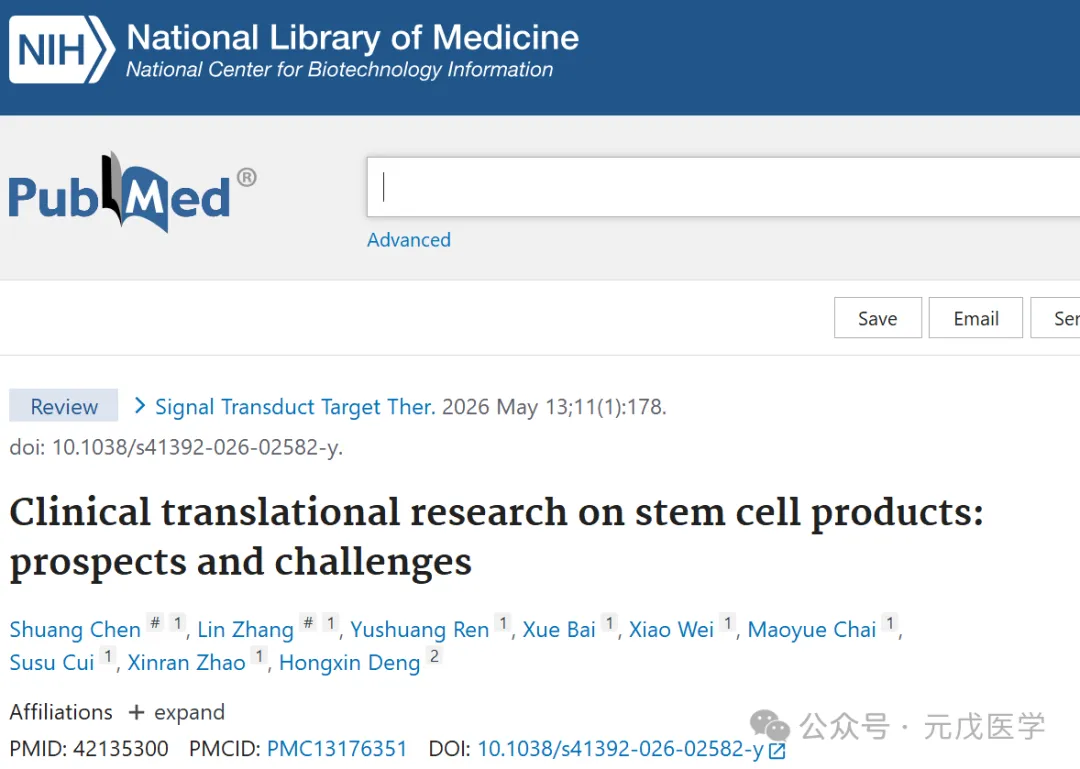
Recently, Professor Deng Hongxin from Sichuan University led a team to publish a significant review article titled "Clinical translational research on stem cell products: prospects and challenges" in the top international journal "Signal Transduction and Targeted Therapy" (with an impact factor of 39.3). The article systematically reviewed the global progress in the translational research of stem cell therapies, deeply analyzed the core bottlenecks in industrialization, and pointed out the direction for the future of precise regenerative medicine.
01 Clinical transformation enters the fast lane: Two generations of technology, trillion-dollar blue ocean
Stem cell therapy has gone through two generations of development paths.
The first generation was mainly composed of adult stem cells: Hematopoietic stem cell (HSC) transplantation has become the "gold standard" for treating blood diseases such as leukemia and sickle cell anemia; Mesenchymal stem cells (MSC) have demonstrated strong immune regulation and tissue repair capabilities, making them the most active cell type in clinical research. There are 1,511 related clinical trials worldwide, covering acute respiratory distress syndrome in COVID-19, heart failure, spinal cord injury, knee osteoarthritis, etc.
The second generation is represented by pluripotent stem cells (PSCs): embryonic stem cells (ESCs) and induced pluripotent stem cells (iPSCs) possess nearly unlimited differentiation potential. Japanese scientists used iPSC-derived retinal pigment epithelial cells to treat macular degeneration, opening the chapter of personalized regenerative medicine; clinical trials involving iPSC-derived cardiomyocytes for treating heart failure, CAR-T/NK cells for tumor immunotherapy, and islet-like cells for diabetes are being carried out globally.
As of November 2024, there have been over 8,200 registered stem cell intervention studies on ClinicalTrials.gov, covering more than a dozen systems of diseases such as blood, cardiovascular, neurological, digestive, ophthalmic, and dermatological.
02 From the Laboratory to the Pharmacy: The Launch Timeline of 37 Products
The maturity of technology is facilitating the implementation of the products. Globally, 37 stem cell products have been approved for marketing as drugs in various countries or regions:
The United States was the first to approve the hematopoietic stem cell product Hemacord derived from umbilical cord blood in 2011. Mesenchymal stem cell products are also flourishing: In South Korea, multiple products have been approved for use in subcutaneous tissue defects, acute myocardial infarction, Crohn's disease anal fistula, osteoarthritis, etc.; in Japan, there are products used for graft-versus-host disease, spinal cord injury, etc.
It is particularly worth noting that the combination of genetic engineering and stem cell technology has led to more powerful therapies. For instance, Zynteglo, developed by Bluebird Bio, is a genetically modified hematopoietic stem cell carrying the β-globin gene. It has been approved for use in treating β-thalassemia in Europe and the United States, solving the problem that traditional hematopoietic stem cells cannot correct genetic defects.
Although China started relatively late, its momentum is strong. As of November 2024, the National Medical Products Administration has accepted over 130 applications for clinical trials of stem cell drugs. In June 2024, Bosheng Biotechnology's "Aimusetao Injection" (used for treating hormone-resistant acute GVHD) was accepted and included in the priority review, marking a crucial step for China's stem cell technology from basic research to clinical application.
03 The core challenge: Large-scale production and quality control are the "lifeline"
Although the prospects are promising, the clinical application of stem cell products still faces severe challenges. The review points out that large-scale, standardized production and strict quality control are the key bottlenecks restricting industrialization.
Stem cells are "living" drugs, featuring characteristics such as heterogeneous sources, inability for terminal sterilization, limited number of expansion generations, and complex quality control. From the "milligram-scale" cultivation in the laboratory to the "hundred-milligram-scale" production required for clinical treatment, it represents a significant technological leap:
Evolution of the preparation system: From traditional 2D cultivation (cell factory) to 3D cultivation (microcarriers, microcapsule bioreactors), and then to systems such as Quantum hollow fiber bioreactors, the yield of MSCs can be increased by 50-100 times compared to manual cultivation.
Full-process quality control: Covers aspects such as cell characteristics (morphology, surface markers, differentiation potential), purity, viability, sterility, endotoxins, genetic stability (karyotype, STR, gene mutations), etc.
Storage and transportation: Establish the master cell bank (MCB) and working cell bank (WCB), maintain cell viability in an ultra-low temperature liquid nitrogen environment, and ensure that the entire logistics process is temperature-controlled and traceable.
04 Future Outlook: Towards a New Era of Precision Regenerative Medicine
The team led by Professor Deng Hongxin pointed out in the review that the clinical application of stem cell therapy is currently at a critical stage of transitioning from breakthrough achievements to large-scale and accessible treatments. In the future, the industry needs to focus on addressing three core issues:
Solving the problem of cellular heterogeneity: Developing more sophisticated single-cell analysis techniques to achieve precise characterization and sorting of cell populations, and optimizing the cultivation process to reduce batch-to-batch variations.
Comprehensively enhance safety: By improving the differentiation protocol, using gene editing technology, developing low immunogenicity cell lines, and conducting long-term follow-up, closely monitor and avoid genetic instability, tumor formation risks, and immune rejection reactions.
Optimize processes and control costs: By integrating microfluidics, automation, artificial intelligence and new bio-materials, a smart, closed-loop biological manufacturing platform is constructed to achieve stable, efficient and low-cost large-scale production.
Summary
The transformation of stem cell therapy has never been an individual effort. It requires scientists, clinicians, the industry, and regulatory agencies to work together, with a rigorous scientific attitude and a continuous spirit of innovation, to overcome the "last mile" from the laboratory to the bedside. We have every reason to believe that in the near future, stem cells will achieve more extensive clinical applications in the treatment of major diseases such as heart disease, neurodegenerative diseases, and diabetes, truly ushering in a new era of precise regenerative medicine.